Synopsis
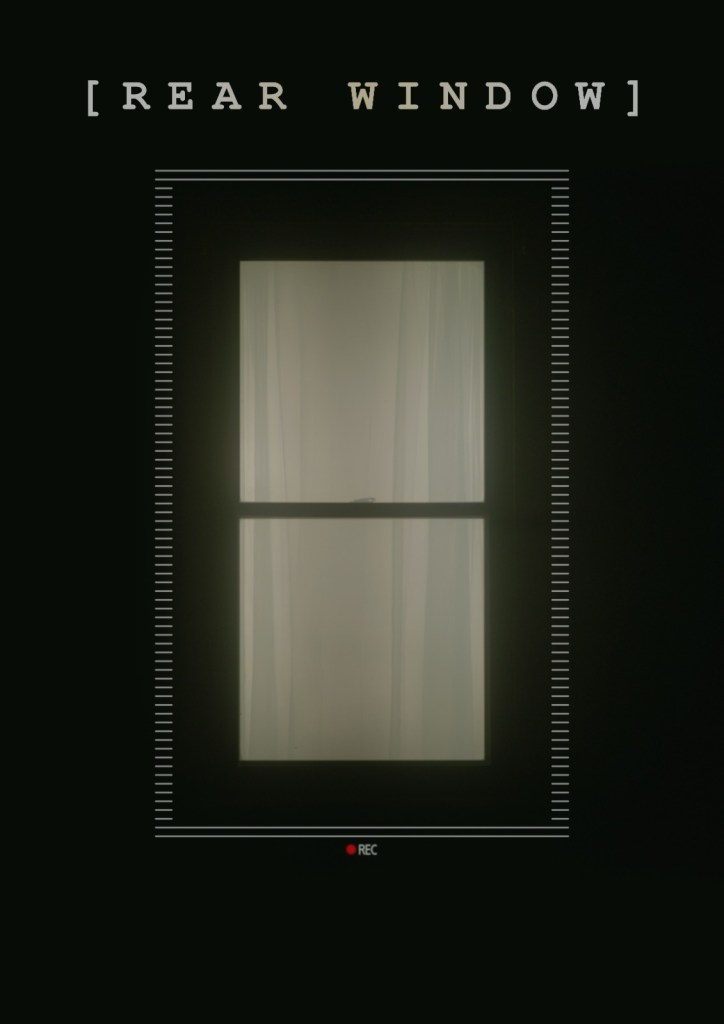
While attending a virtual university class as a guest speaker, TJ, a young experimental filmmaker, notices an inconspicuous detail in one of the student films: a transition shot of a window, identical to the window across from his room that TJ’s been obsessively filming during the COVID lockdown. In trying to navigate his response to the situation, TJ faces bigger philosophical questions about the nature of images.

Director’s Statement
Based loosely on a real incident, Rear Window is a film noir for the digital age about the nature of images and how they circulate and are (re)appropriated. While Walter Benjamin mediated the work of art in the age of mechanical reproduction around 90 years ago, that reproduction (today, in digital form) has become ever more prevalent. In the pandemic-stricken world that TJ inhabits, his detective work is contained in one room and three frames: his computer screen, his camera, and the window across from his room. If Hitchcock’s Rear Window was mainly concerned with what went on inside the window, my Rear Window is concerned with the window itself; not the window as the conveyor of action or narrative information, but a closed and opaque window which doesn’t reveal anything inside. Rear Window is a narrative film about an experimental film which reflects on the tension between storytelling and experimentation, the shortcomings of the former, and the (im)possibility of the latter. TJ, acting as a Benjaminian detective of sorts, tries to recover the “aura” of an image: a rather ordinary yet very specific image. The question he faces is whether images can have an aura in the age of digital reproduction.
Key Cast and Crew:
Director, Writer, Producer: Arta Barzanji
Actors: Malik Uhuru & Sasha Higgins
Cinematography: Zach Reese
Editing: Shervin Maniei & Arta Barzanji
Sound: Alex Arrowsmith & Hamed Hosseinzadeh
Music: Barnabás Szöllösi
 halluCINEtions