An ongoing curatorial and research project recovering Iran’s independent 8mm filmmaking movement of 1969–79.
Curated by Arta Barzanji and Shaghayegh Raoufi
Research and archival collaboration: Hadi Alipanah
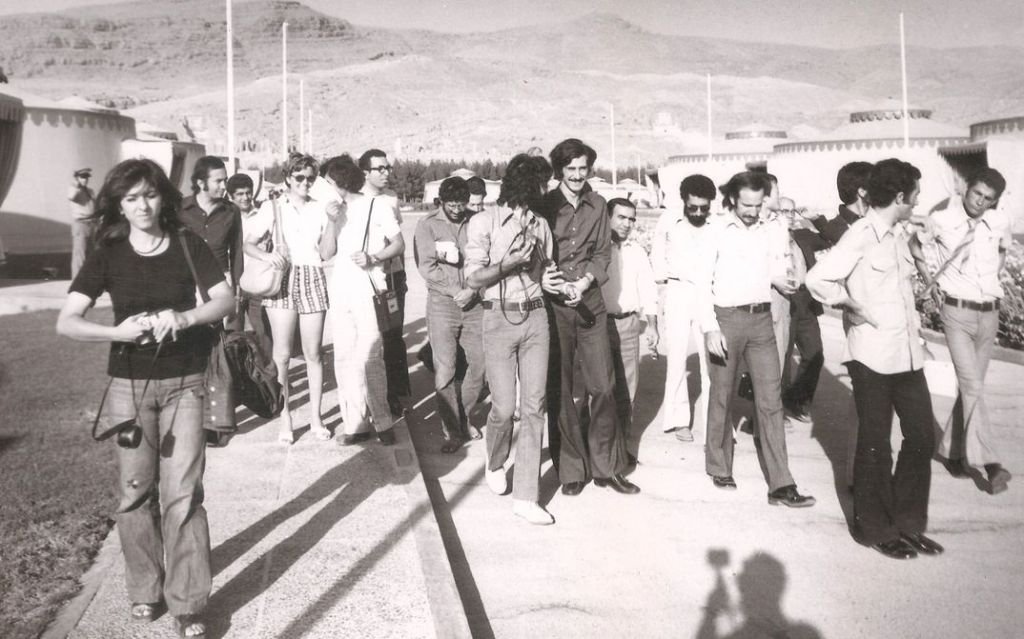
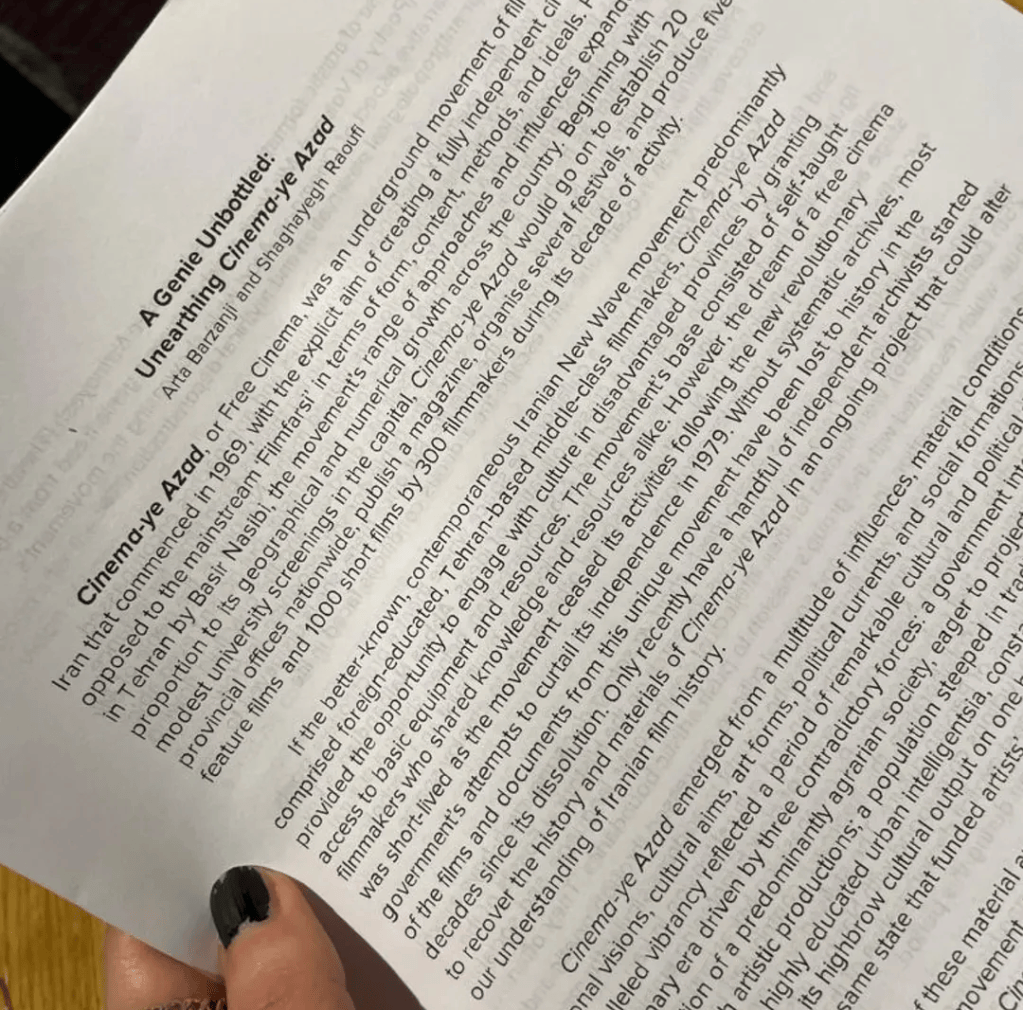
Cinema-ye Azad, or Free Cinema, was an underground filmmaking movement founded in Iran in 1969 by Basir Nasibi. Beginning with university screenings in Tehran, it developed into a nationwide network with more than twenty branches, bringing together hundreds of largely self-taught and amateur filmmakers working primarily with 8mm and Super 8. The movement developed its own structures of production, exhibition, discussion and exchange outside both the commercial film industry and established state institutions, organising cine-clubs, workshops, festivals and publications alongside the production of more than a thousand films.
Cinema-ye Azad was therefore not simply a group of filmmakers but an alternative film culture. Its relative independence, geographical decentralisation and use of low-gauge formats created possibilities for filmmakers working beyond Tehran and outside the professional industry, while scarcity itself helped shape the films: lightweight cameras, small crews and limited resources produced new relationships between filmmakers, subjects and their surroundings.
Following the movement’s dissolution around the 1979 Revolution, its films and documents were never systematically preserved. Many works remain lost, damaged or inaccessible, while surviving prints and negatives are scattered and often fragile. This ongoing project, co-curated by Arta Barzanji and Shaghayegh Raoufi in collaboration with archivist and researcher Hadi Alipanah in Iran, seeks to recover both the films and the conditions that allowed them to exist and circulate.
Research and exhibition develop together. Alipanah’s first-hand archival work in Iran locates films, filmmakers, documents and histories that reshape subsequent programmes; screenings, in turn, bring the work into new contexts and create further possibilities for research and recovery. Because even basic materials through which films normally circulate are often absent, the project has also involved writing new synopses and contextual texts and creating posters, trailers and other materials for the films.
Since 2025, selections have been presented in London, Bristol and Los Angeles, with programmes at the Institute of Contemporary Arts, Cube Cinema, UCLA Film & Television Archive and the Barbican, and a further selection forthcoming at the International Film Festival Rotterdam in 2027.
PRESENTATIONS
Institute of Contemporary Arts, London
7 June 2025
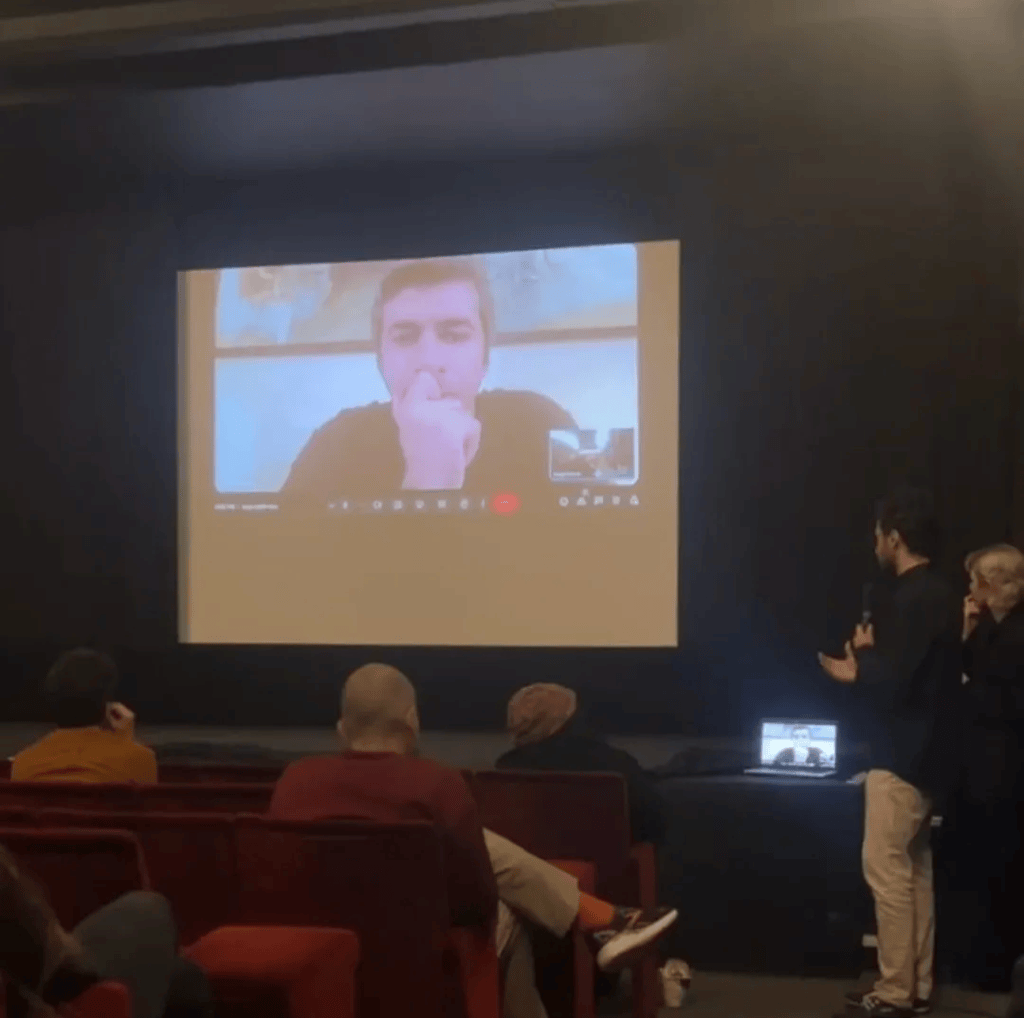
Cinema-ye Azad + Q&A
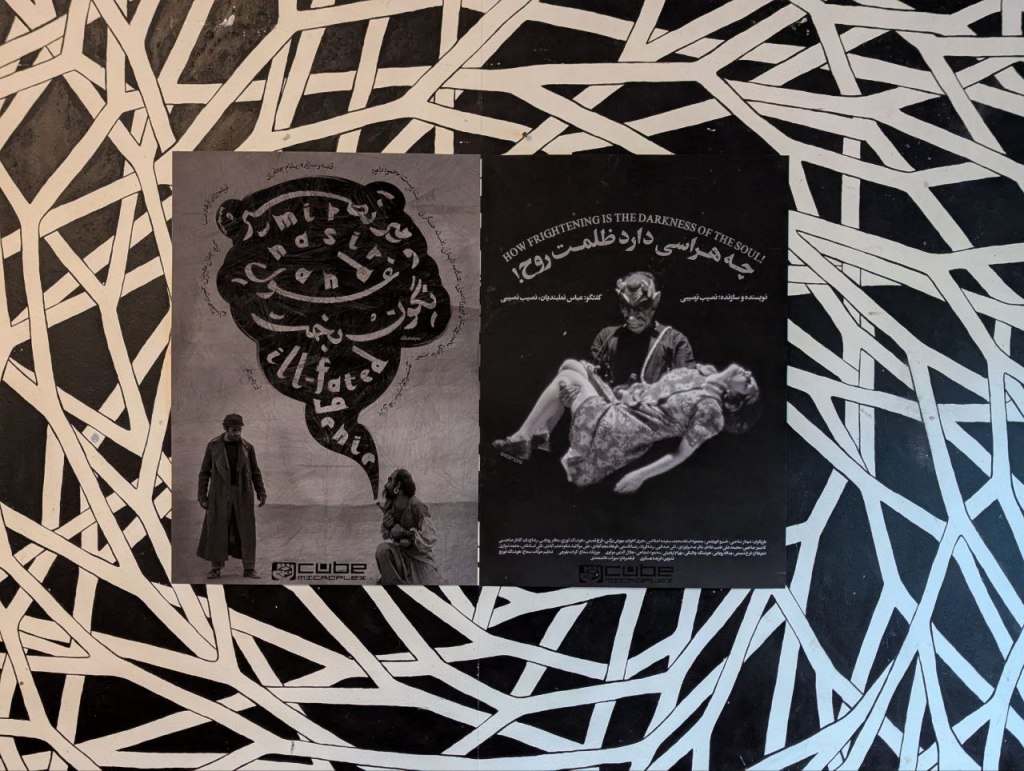
The project’s first programme introduced Cinema-ye Azad through two contrasting works: Nasib Nasibi’s avant-garde film-poem How Frightening Is the Darkness of the Soul! and Behnam Jafari’s feature Mir Nasir and the Ill-Fated Genie. Together they placed Cinema-ye Azad in dialogue with the wider experimental, literary and theatrical culture from which it emerged while introducing its recurring engagement with myth, social reality and formal experimentation. The screening was followed by an online Q&A with Hadi Alipanah.
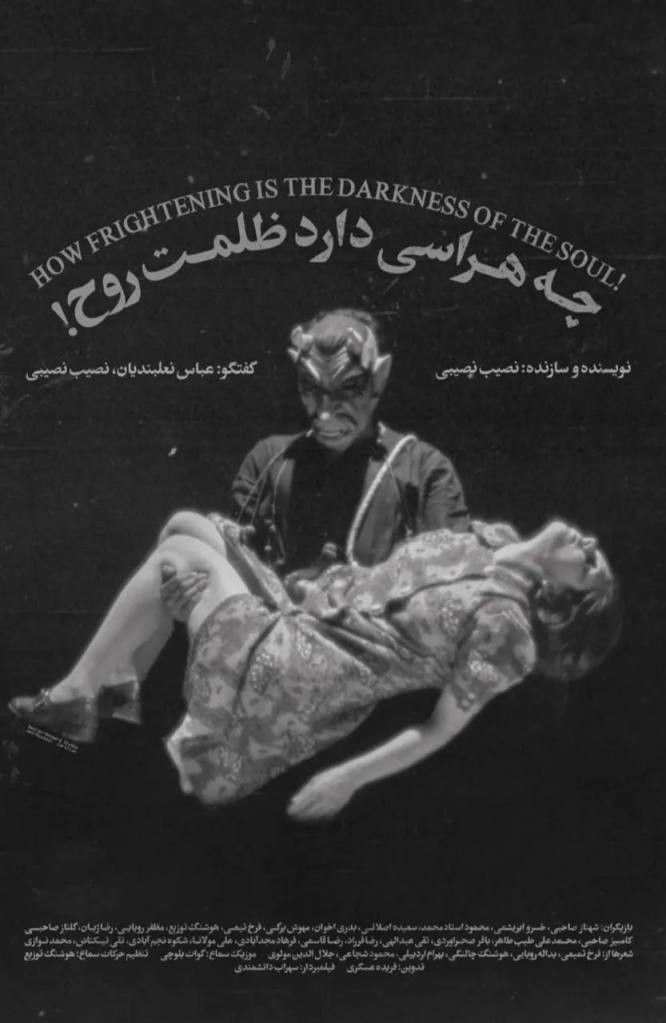
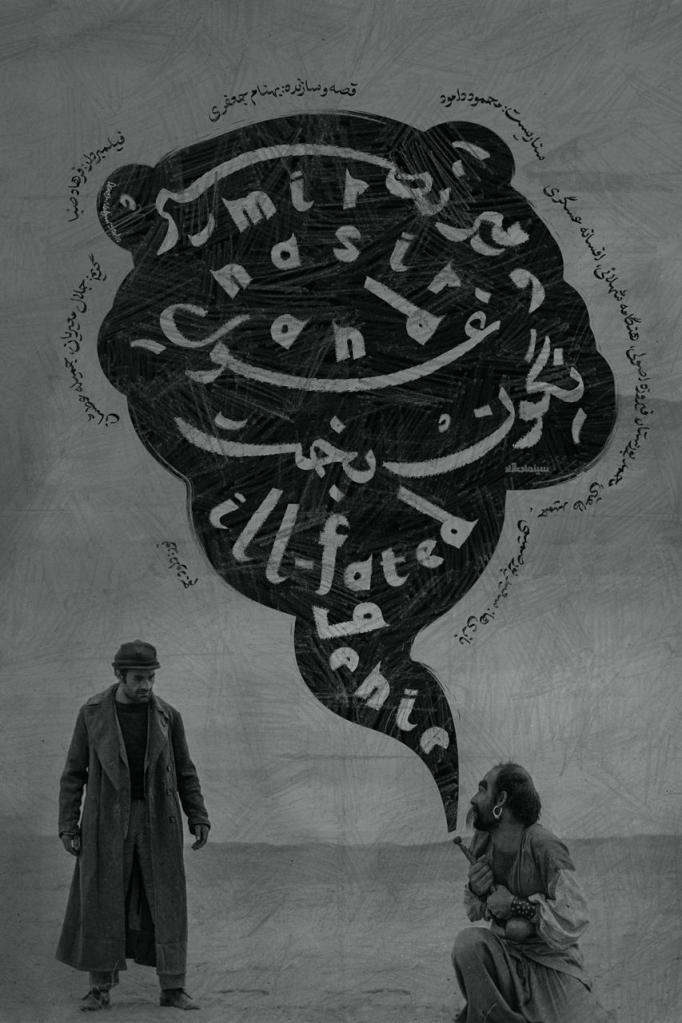
Caption: Posters designed by Amirhossein Zafarian on the occasion of the ICA screening
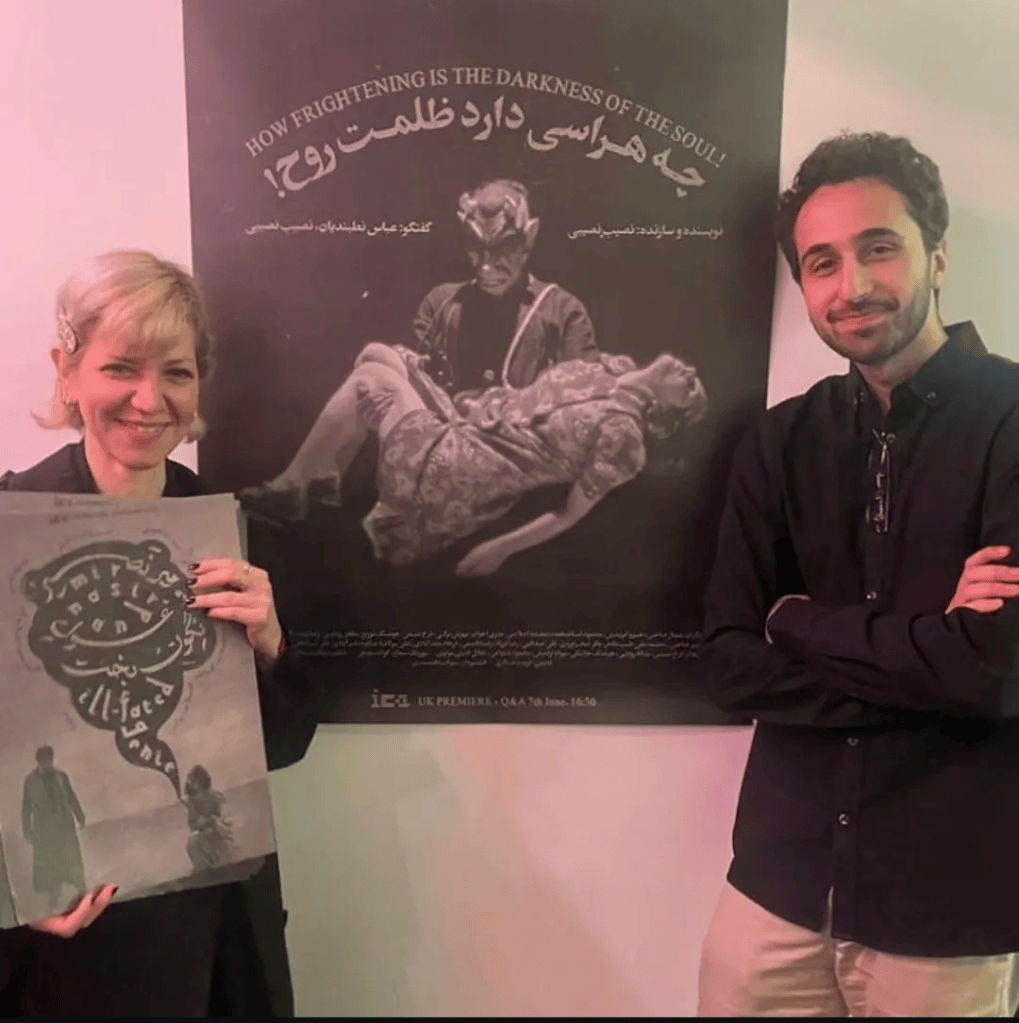
Cube Cinema, Bristol
22 November 2025
Cinema-ye Azad Double Bill
The introductory programme travelled to Bristol’s Cube Cinema, again pairing How Frightening Is the Darkness of the Soul! with Mir Nasir and the Ill-Fated Genie, followed by an online discussion with Hadi Alipanah.
UCLA Film & Television Archive, Los Angeles
13–14 June 2026
Cinema-ye Azad: Nasib Nasibi / Cinema-ye Azad: Behnam Jafari
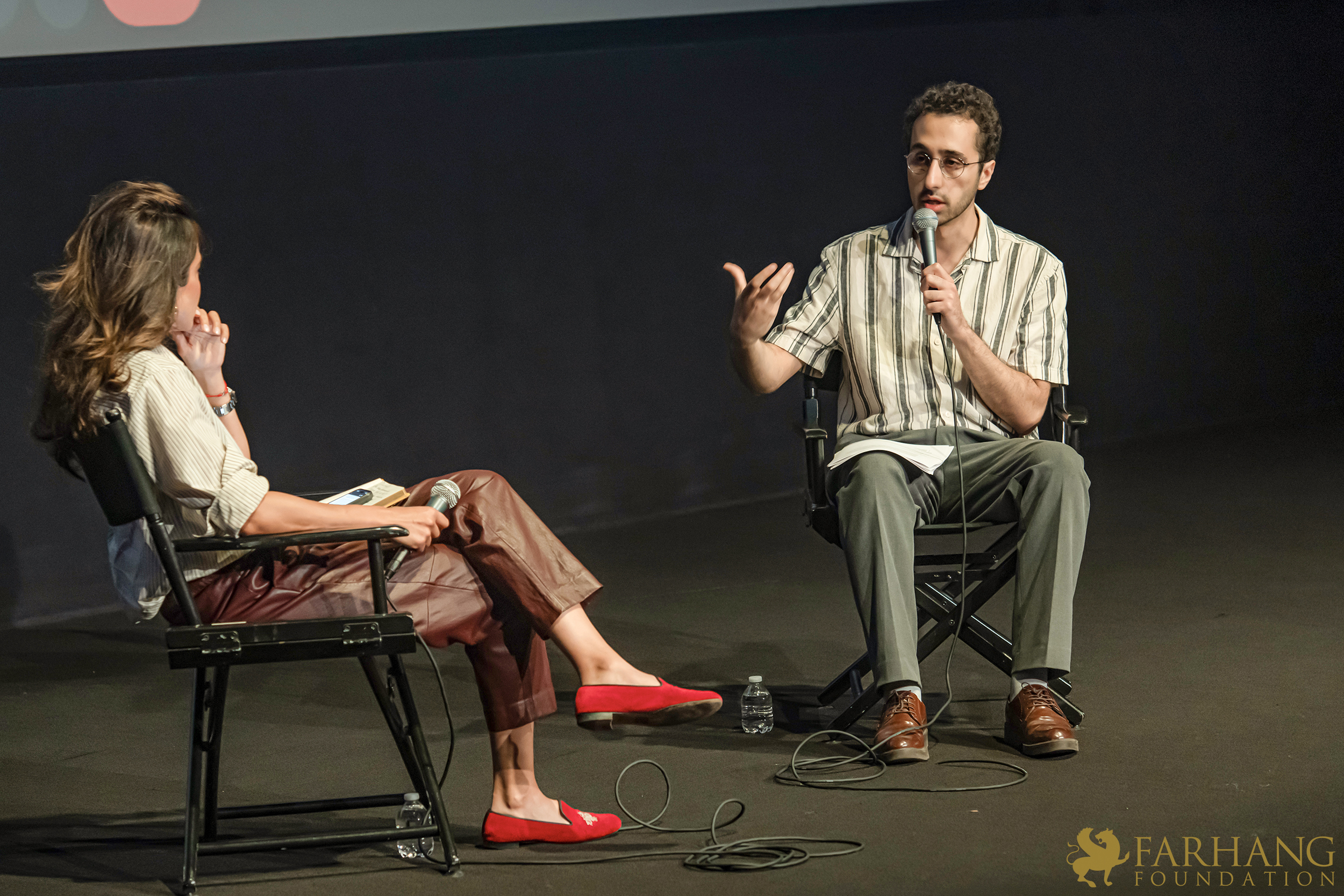
Presented as part of UCLA’s 2026 Celebration of Iranian Cinema, the project expanded into two programmes devoted to Nasib Nasibi and Behnam Jafari. The first paired Nasibi’s From Isfahan to Abarkooh with How Frightening Is the Darkness of the Soul! and was followed by a Q&A with Arta Barzanji and Hadi Alipanah, joining via video from Iran, moderated by actor Sara Seyed. The second assembled five works by Jafari, ranging from short social and experimental films to Mir Nasir and the Ill-Fated Genie, and was introduced by filmmaker Amir Naderi. The programmes were curated by Arta Barzanji and Shaghayegh Raoufi with research and archival support from Hadi Alipanah.
Nasib Nasibi programme
Behnam Jafari programme
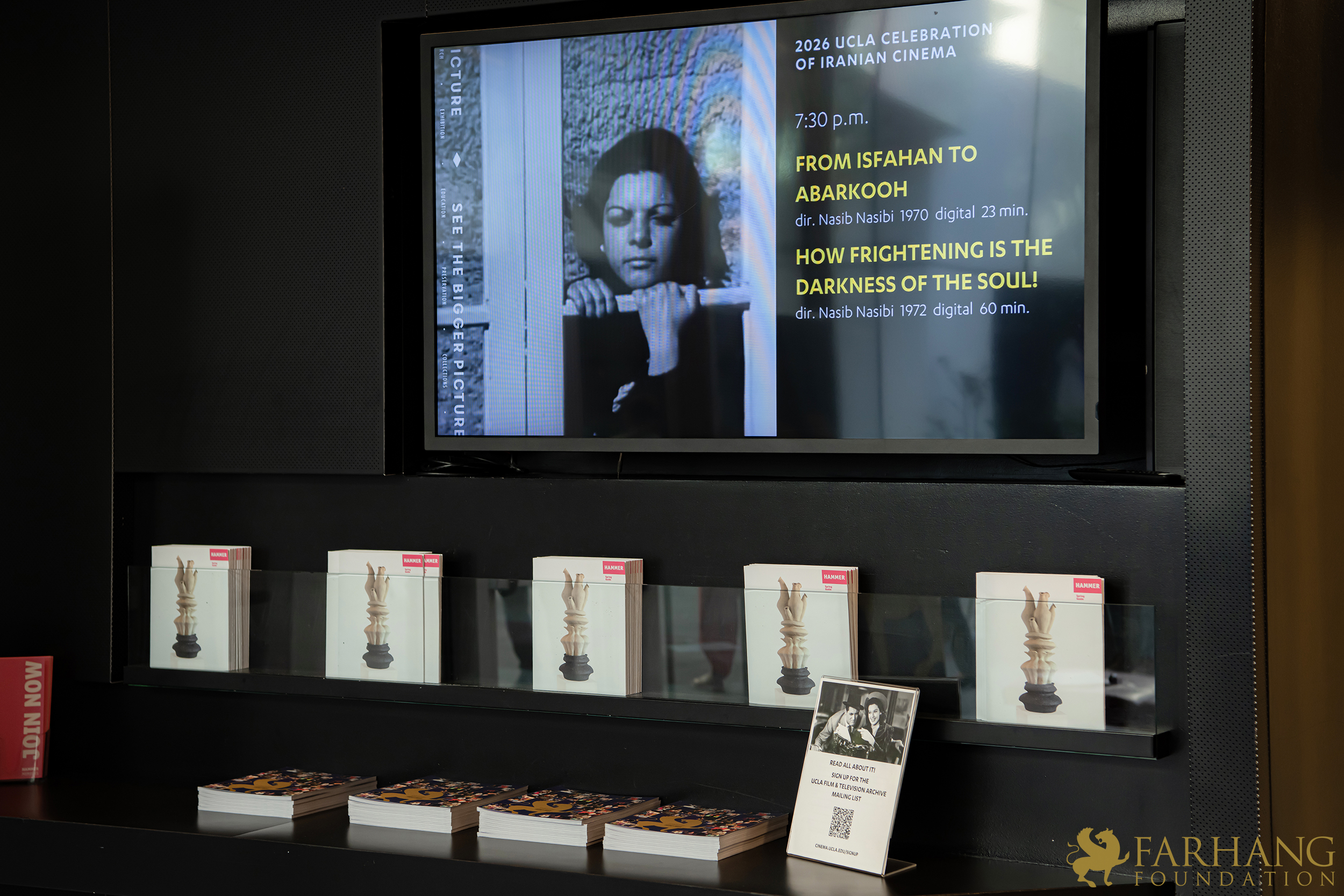
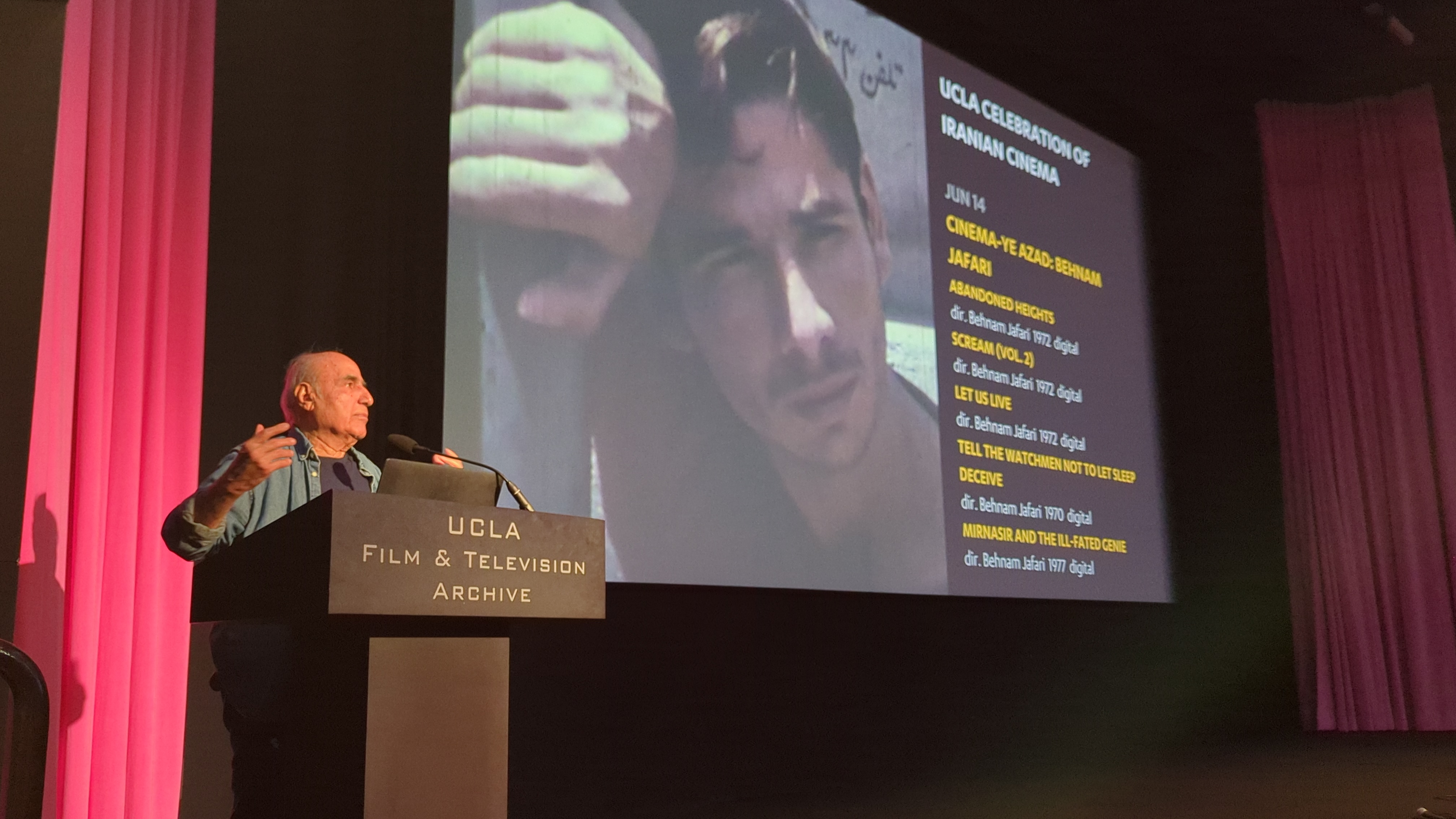
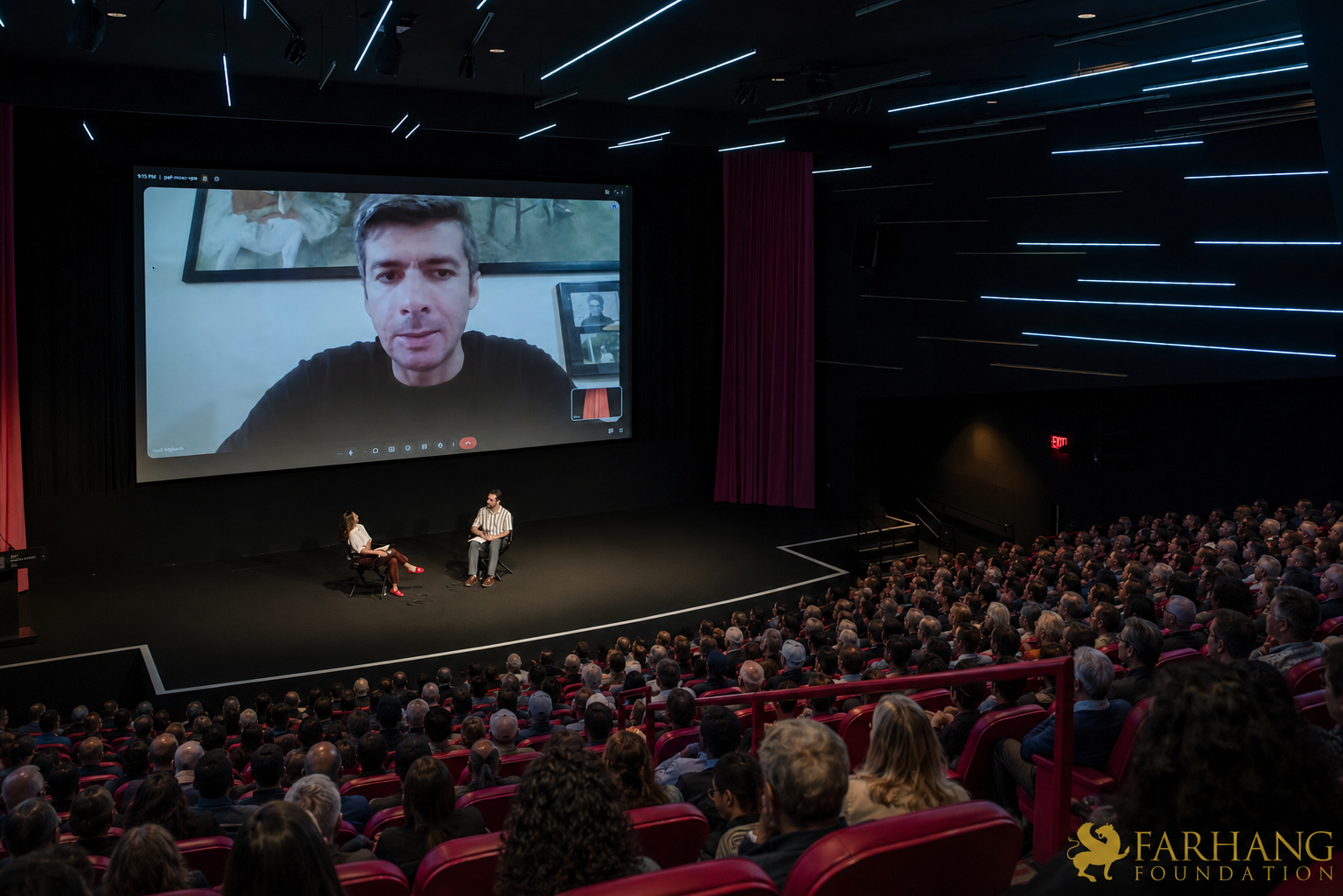
More Event Photos at Farhang Foundation
Barbican, London
28 August 2026
Cinema-ye Azad: Further Explorations
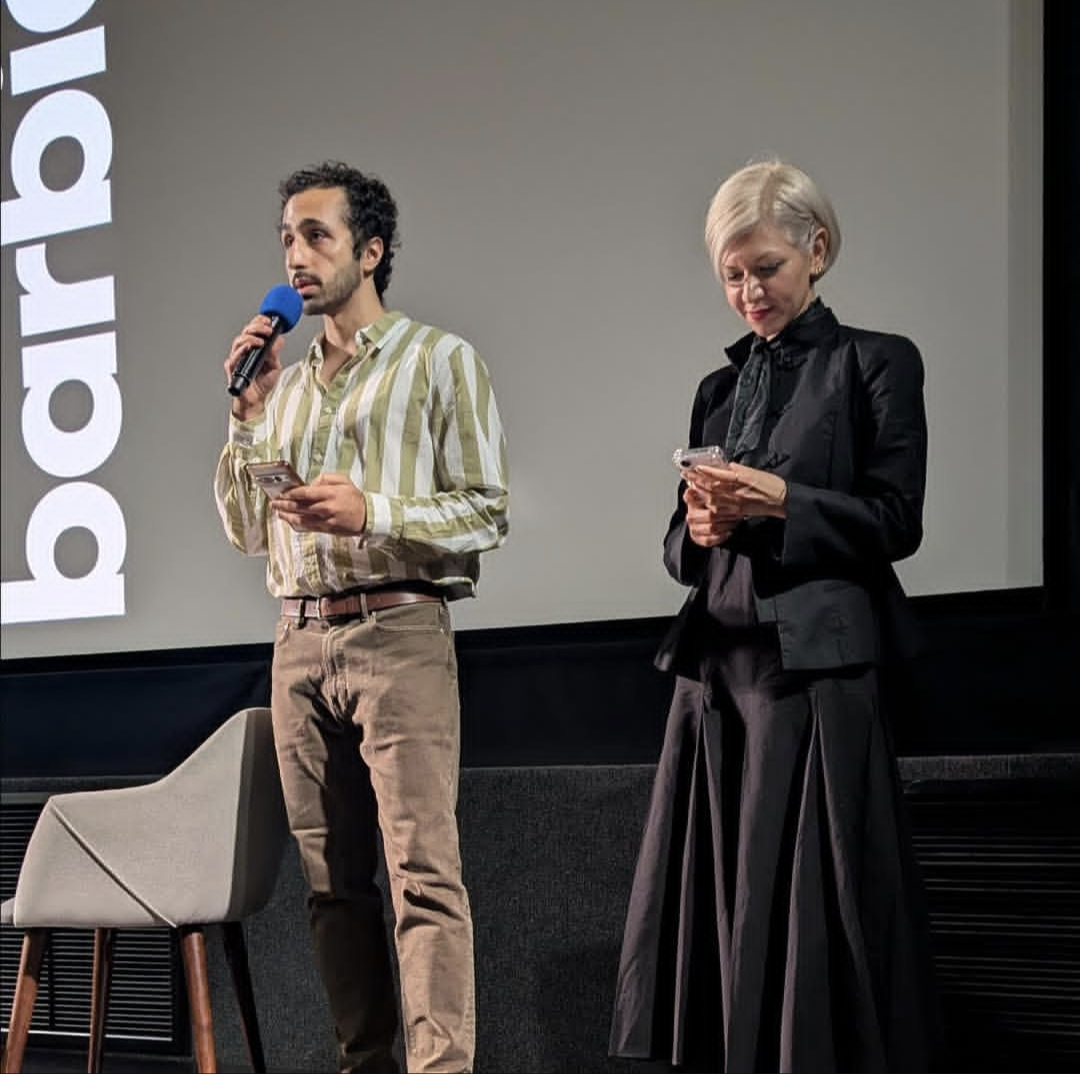
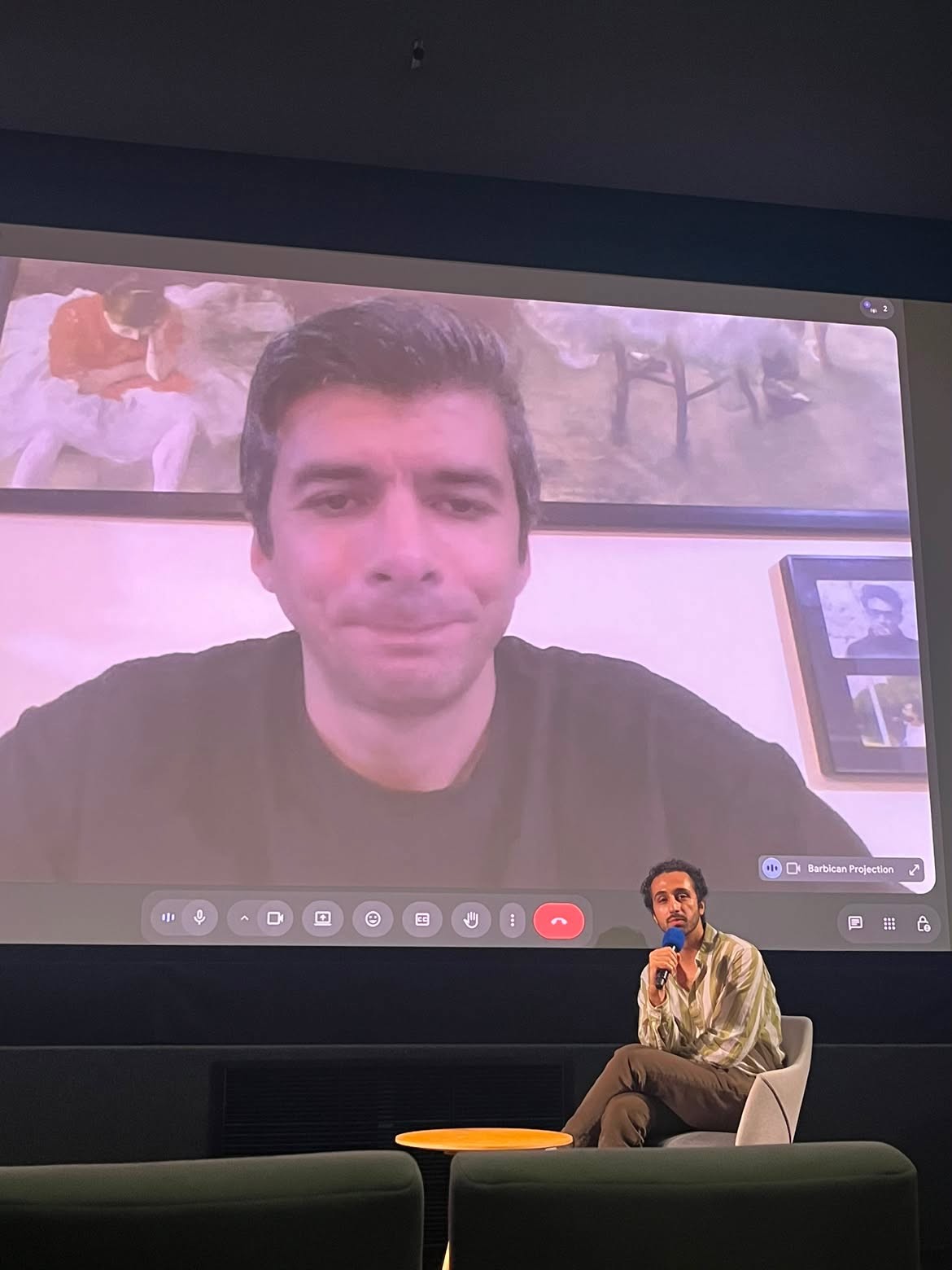
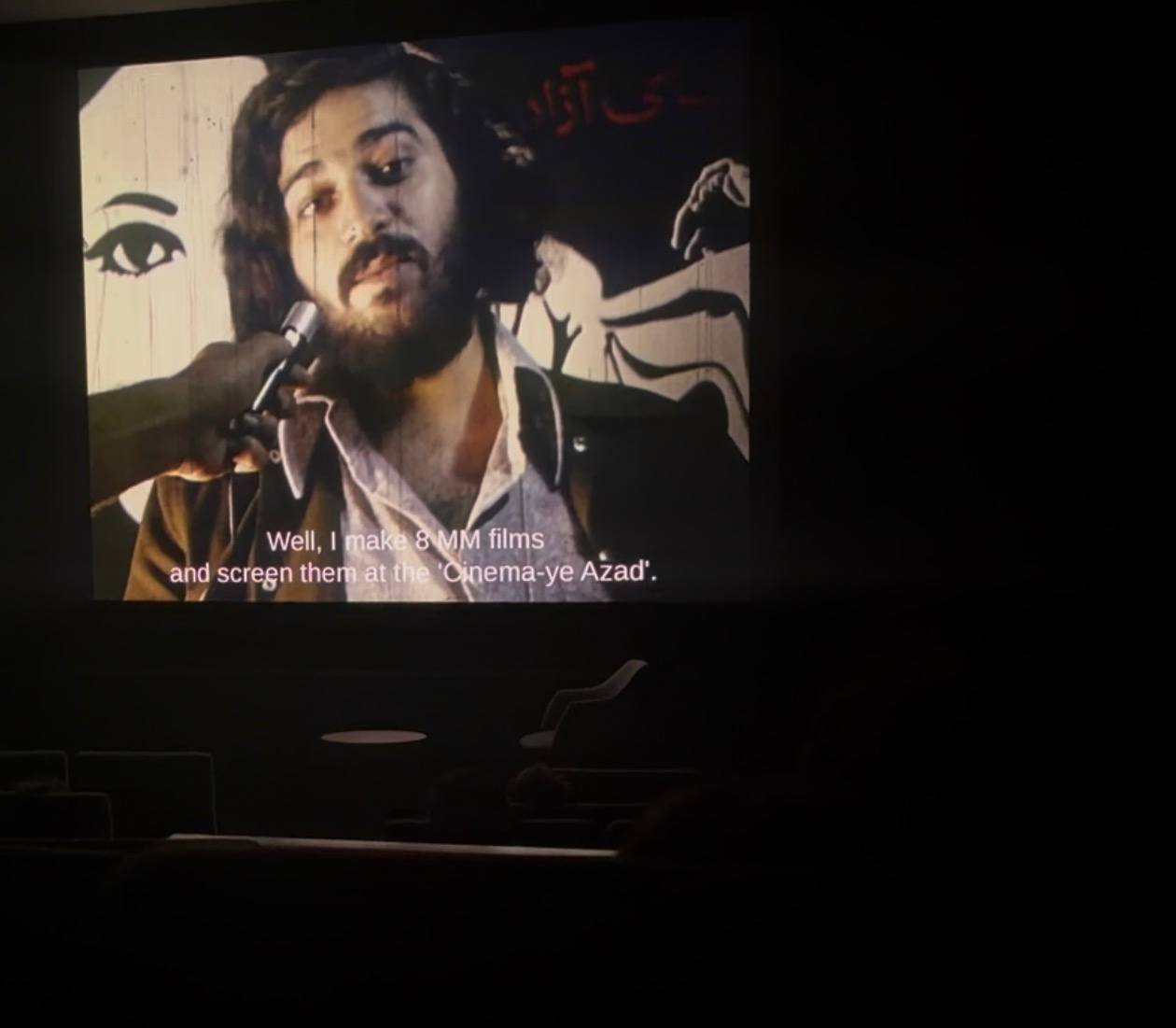
Presented within Barbican’s Cinema Restored, this programme shifted the emphasis toward Jafari’s short-form work, bringing together four films exploring alienation, social change and experimentation alongside Nasib Nasibi’s From Isfahan to Abarkooh. The screening was followed by a Q&A with Hadi Alipanah.
International Film Festival Rotterdam
2027 — forthcoming
A new Cinema-ye Azad selection will be presented at IFFR 2027.
More information TBA.
RESEARCH & WRITING
Between Myth and Reality: Documentary in Iran’s Cinema-ye Azad Movement
Arta Barzanji, Shaghayegh Raoufi and Hadi Alipanah
Documentary Magazine, June 2026
The essay examines Cinema-ye Azad’s relationship to documentary practice, particularly how 8mm production, decentralised filmmaking and the movement’s engagement with provincial life produced forms of observation distinct from institutional Iranian documentary. It also draws on the archival research underpinning the wider Cinema-ye Azad project.
Read the essay at Documentary Magazine
Cinema-ye Azad – Further Explorations
Arta Barzanji, Shaghayegh Raoufi & Hadi Alipanah
Intervals, August 2026
Contextual essay accompanying the Barbican programme, focusing on Behnam Jafari’s formally varied short-film practice and Nasib Nasibi’s From Isfahan to Abarkooh.
RELATED EVENTS & RESOURCES
Related Presentations
Taipei Film Festival, 2026
Cinema-ye Azad was included in the festival’s Tehran retrospective through two dedicated short-film programmes.
Found Futures III: Cinema-ye Azad — Arsenal / SİNEMA TRANSTOPIA, Berlin
14 June 2023
As part of Arsenal’s Archival Assembly #2, Hadi Alipanah presented his research into Cinema-ye Azad alongside two Super 8 films from the movement.
Related Publications
“A Brief History of the Cinema-ye Azad Movement in Iran”
Hadi Alipanah — UCLA Film & Television Archive, 2026.
A historical overview of the movement and of Alipanah’s ongoing recovery project.
“Une brève histoire du Cinema-ye Azad (1969–1979)”
Elyas Chaib-eddour Sekimi — Emitaï, June 2026
A French-language history of the movement, drawing extensively on Hadi Alipanah’s archival research and unpublished materials.
“Freedom in Madness – On Nasib Nasibi, an Avant-Garde Iranian Filmmaker”
Hadi Alipanah — Arsenal Filminstitut.
An extended study of Nasib Nasibi’s life and work, tracing his relationships with Fereydoun Rahnema, the Theatre Workshop and Poetry of Volume, as well as the surviving and missing history of his films.
Further Resources
Cinema-ye Azad Instagram
Ongoing archival discoveries, recovered materials, screening announcements and project updates.

